"The special part of MIKA is that it's not a special occasion restaurant," Chef Michael White said when he opened his first standalone Florida restaurant on Ponce de Leon Boulevard in December 2024. He wanted something his neighbors would use on a Tuesday, not save for an anniversary. His shorthand for the idea: "truffles and blue jeans."
Today, that same stretch of Ponce de Leon looks less like one restaurant's bet on an underserved neighborhood and more like a corridor. A resident who wants a full evening out, drinks somewhere, dinner somewhere else, maybe dessert down the block, can now do all of it inside two blocks and never move the car. That is a genuinely new fact about daily life in Coral Gables, and it happened fast enough that most people who live here have only caught pieces of it.
Two Blocks, Not Two Neighborhoods
The stretch in question runs through The Plaza Coral Gables, a mixed-use development anchored by a 4.5-star Loews hotel, office towers, and residences, roughly between the 2800 and 3000 blocks of Ponce de Leon Boulevard. Four restaurants worth knowing sit inside it:
- MIKA, at 3007 Ponce de Leon Blvd, Chef Michael White's Mediterranean Riviera concept, open since December 12, 2024.
- Cantina Leon, at 2955 Ponce de Leon Blvd, a Mexico City-inspired cantina from Chef Gerardo B. De Negri that opened May 21, 2026.
- CVI.CHE 105, Chef Juan Chipoco's fifth location, serving Peruvian seafood and nikkei dishes.
- Fogo de Chão, the Brazilian churrasco house with an open-air grill bar and a butchery counter for guests who want to take a cut home.
None of these are outposts of a national chain trying out a Miami zip code. Three are chef-led concepts with a specific point of view, and the fourth built out a dedicated meat-aging and butchery program that goes well beyond a standard steakhouse menu. That density of intention, four kitchens each making a real argument for themselves, inside two walkable blocks, is not something Coral Gables had a year ago.
The Gap Before MIKA
White's read on Coral Gables when he was scouting the space is worth sitting with. He is a chef who built his name on two-Michelin-star fine dining in New York, at Marea, the kind of restaurant you plan a month ahead for. When he looked at Coral Gables, he did not see a market that needed another special-occasion room. He saw a neighborhood full of the exact clientele who'd fly to New York for Marea, but without a version of himself they could walk to on a weeknight.
"As I like to say, truffles and blue jeans. Come as you are."
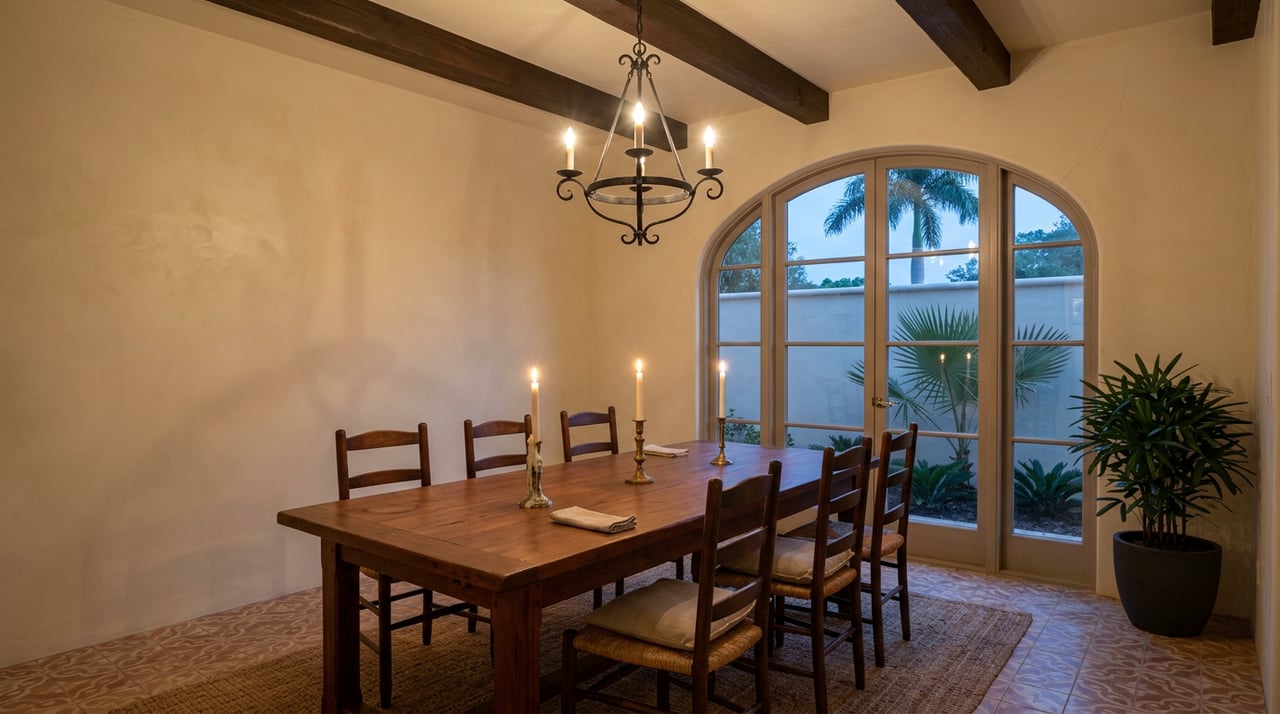
That is the idea MIKA opened around: an 8,195-square-foot room designed by Bishop Design with chukum-textured walls and burnished metals, built to feel like a comfortable home rather than an event. The menu leans on crudos, house-made pasta, and a fusilli with octopus and bone marrow that White has carried with him since Marea. It is fine dining technique without the fine dining occasion, which is precisely the gap he'd identified.
A Year and a Half Later, a Different Register
Cantina Leon did not try to compete with that read. It built the opposite one. Where MIKA is quiet and approachable, Cantina Leon is loud on purpose. The 7,500-square-foot, multilevel space was designed by Maxielle De Jesus of DesignXtudio around 1920s post-Porfiriato Mexico City, with green velvet banquettes, brass accents, and a central bar built to anchor the room. There is a dedicated tequila and mezcal tasting room. There is live entertainment Wednesday through Sunday starting at 7pm. There is an upstairs VIP mezzanine for private events.
Chef Gerardo "Gerry" B. De Negri, who has called Miami home for 17 years after training in Paris and building a chain of gastro bars in Mexico City, has said the restaurant is personal in a specific way:
"This restaurant is deeply personal to me."
The opening menu backs that up with dishes built for a table that's staying a while: shrimp aguachile tatemado, a torre de mariscos layered with shrimp, octopus, tuna, and avocado, a whole grilled red snapper called pescado zarandeado, a 24-ounce tomahawk, and a filete flameado finished with a tableside flame of tequila. An early diner review singled out the queso fundido with chorizo and the pescado zarandeado for the portion size alone, along with a detail that says something about the pace the restaurant wants you to keep: every table gets a complimentary tray of house-made chips and salsa before anyone orders.
Before any of that opened, the same team quietly debuted a smaller sister spot called Mercadito behind the main dining room in April 2026, a fast-casual counter with chilaquiles, tacos, and esquites for anyone who wants the flavor without the full production. It is worth knowing about on its own. A morning coffee and tacos run at Mercadito costs a fraction of what a table at Cantina Leon does, and it sits on the exact same block.
The Corridor Fills In
MIKA and Cantina Leon are the two restaurants doing the most to define what this stretch feels like, but they are not filling empty storefronts. CVI.CHE 105, already a known name across Miami through Chef Juan Chipoco's other locations, brought its fifth outpost into the same complex, with a menu built around traditional and nikkei-influenced Peruvian seafood. Fogo de Chão anchors the other end with its churrasco bar and a Butchery counter where guests can consult with the restaurant's own butchers before taking a cut home to grill.
Put those four together and a genuine evening routine emerges that did not exist as a single walk before. Start at Fogo's bar for a glass of wine while gauchos work the open flame. Walk two blocks for dinner at MIKA if the mood calls for something quieter, or to Cantina Leon if it calls for tequila flights and live music past 9pm. Stop at CVI.CHE 105 for ceviche on the way. None of this requires reparking, and none of it requires driving toward Brickell or South Beach the way a serious night out in Coral Gables sometimes used to.
A Neighborhood That Keeps Adding to Itself
What makes this worth noting is not that Coral Gables got a few good restaurants. The city has never lacked for good restaurants. Caffe Abbracci has been a fixture since 1989, and the old-guard institutions around Miracle Mile aren't going anywhere. What changed is that two chef-driven concepts, each explicitly built around a gap the other left open, landed inside the same two blocks in under two years, and a pair of established names filled in around them without anyone having to plan it that way.
That kind of organic density tends to say something true about a neighborhood's trajectory. Restaurant operators do not choose blocks by accident. When four kitchens this specific choose the same corner of Ponce de Leon within eighteen months of each other, it's a signal about where the neighborhood's energy already was, not where a developer hoped it might go.
We spend our days walking historic Coral Gables homes with buyers and sellers who care about exactly this kind of texture, the difference between a neighborhood that has restaurants and one that has a corridor you can spend an entire evening in without getting back in the car. If you're weighing a move here, or you already live in the Gables and want a second opinion on a property's setting before you decide anything, Jane Gomez Mena would be glad to talk it through with you.