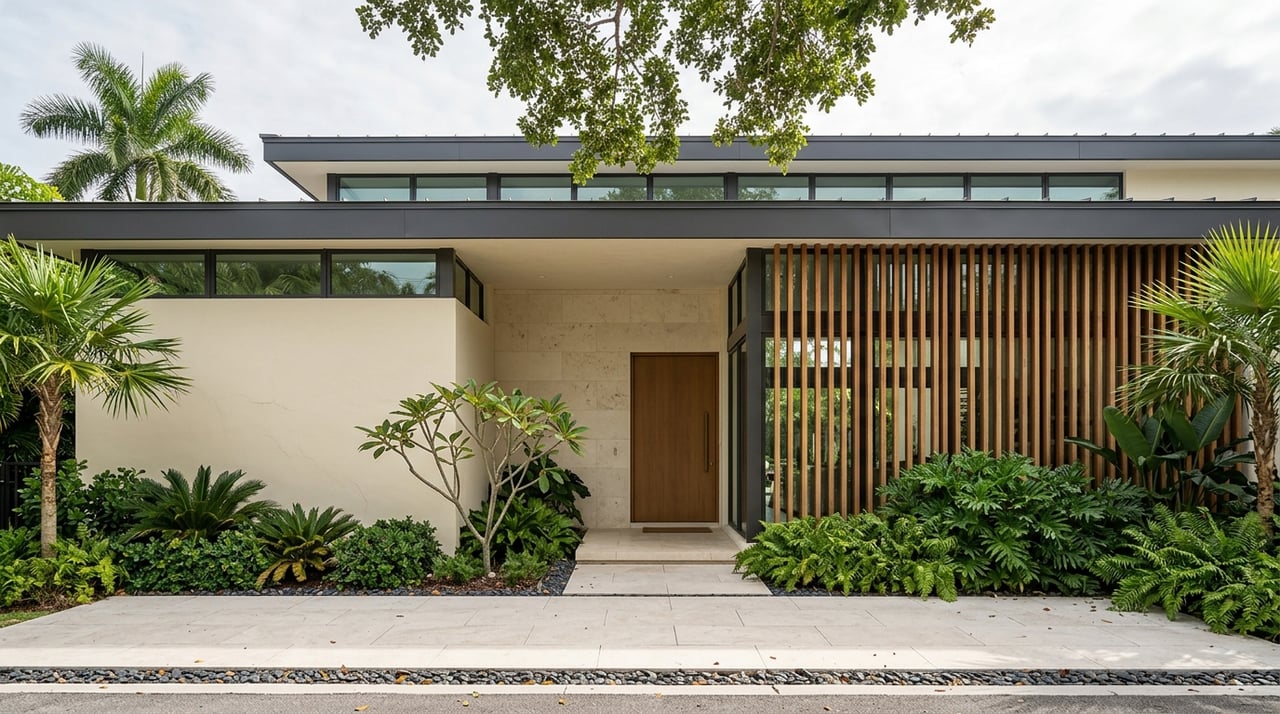
If you have ever looked at a Coconut Grove listing and thought, “I love it, but what style is it exactly?” you are not alone. The Grove’s most memorable homes rarely fit into a single neat box, because this is a neighborhood where architecture, landscape, and climate have always worked together. When you know what to look for, you can read a home more clearly, spot meaningful details in listing photos, and better understand what gives Coconut Grove character. Let’s dive in.
Why Coconut Grove homes feel so distinct
Coconut Grove’s residential identity is shaped by more than facades. Local preservation guidance describes the neighborhood’s character as a mix of architecture, mature canopy, open space, bay views, unusual lot shapes, and a heavily landscaped setting.
That matters when you are buying or selling a character home. In the Grove, a deep porch, a breezy veranda, or a house tucked beneath mature trees is not just attractive design. It is part of a long local pattern of building for shade, airflow, and outdoor living.
In some parts of the Grove, that story also includes Bahamian settlement history and Caribbean vernacular traditions. This is especially important in West Grove and Village West, where local guidance places clear emphasis on those cultural and architectural roots.
Three key styles in Coconut Grove
Coconut Grove character homes often fall along a spectrum rather than into rigid categories. Still, three broad style families appear again and again: Bahamian or Caribbean vernacular cottages, Mediterranean-inspired homes, and tropical modern residences.
Understanding those categories can help you make sense of a listing, compare homes more confidently, and appreciate why two houses in the same neighborhood can feel so different.
Bahamian and Caribbean vernacular cottages
These homes reflect practical responses to South Florida’s climate and the Grove’s cultural history. Local design guidance for the Village West Island and Charles Avenue area points to features such as sash windows, Bahamian shutters, light-colored stucco or clapboard, board-and-batten walls, and gable or hip roofs finished in metal or shingles.
In everyday terms, these houses often feel compact, simple, and porch-centered. They may have modest room counts, but they often offer strong indoor-outdoor flow and a sense of ease that suits the Grove’s subtropical setting.
You can also see this climate-smart logic in historic local references like The Barnacle, which is described as Key West style with open porches, thick coral stone walls, and large windows that capture breezes. That balance of shade, air movement, and connection to the outdoors remains a defining part of the cottage tradition in Coconut Grove.
Mediterranean-inspired homes
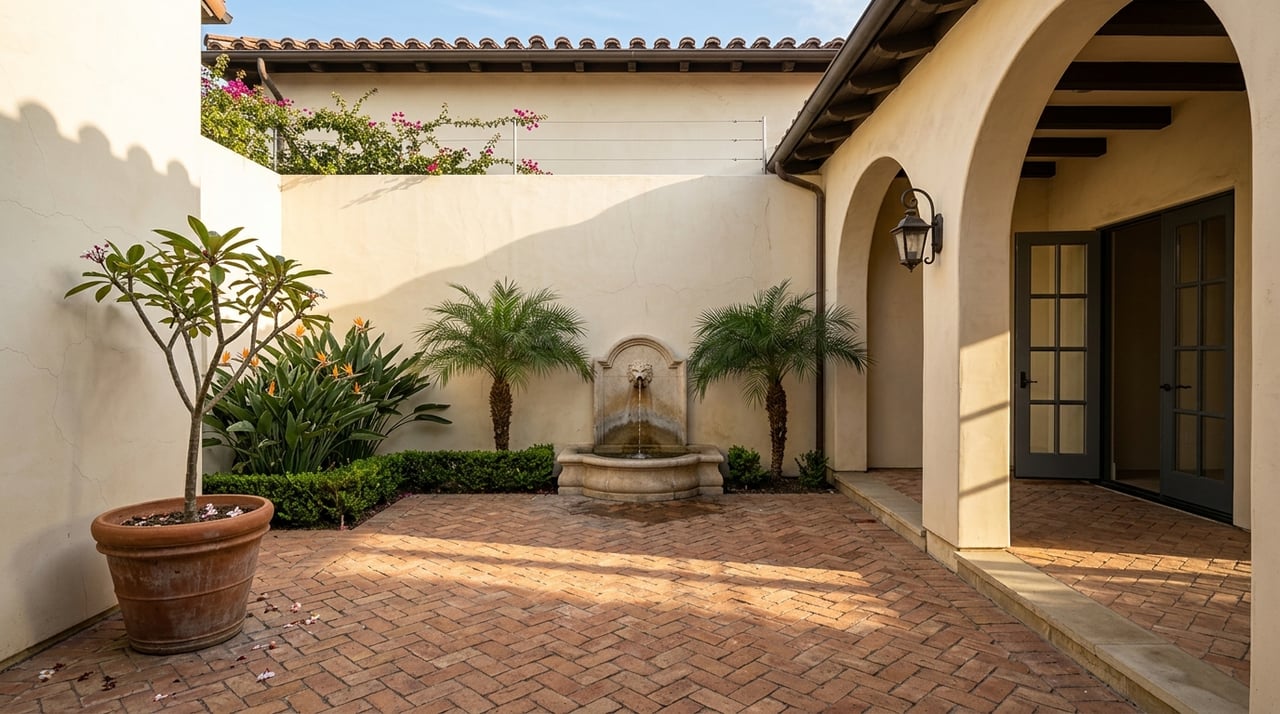
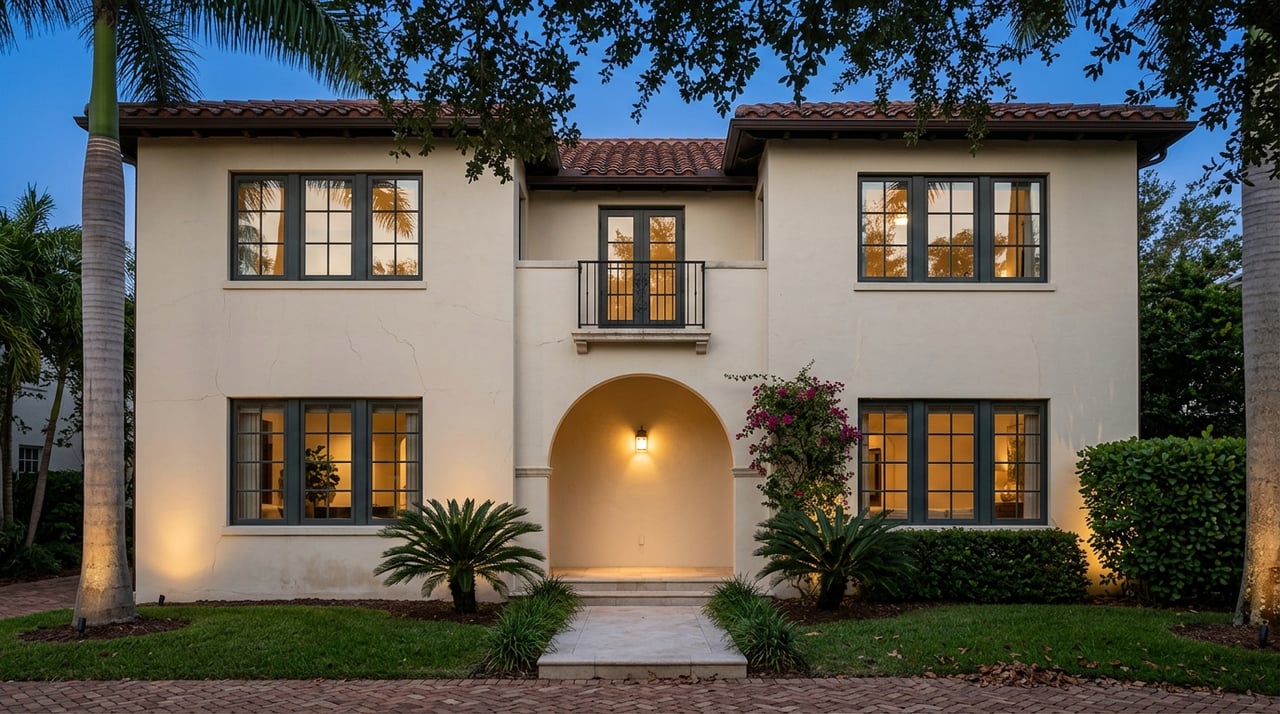
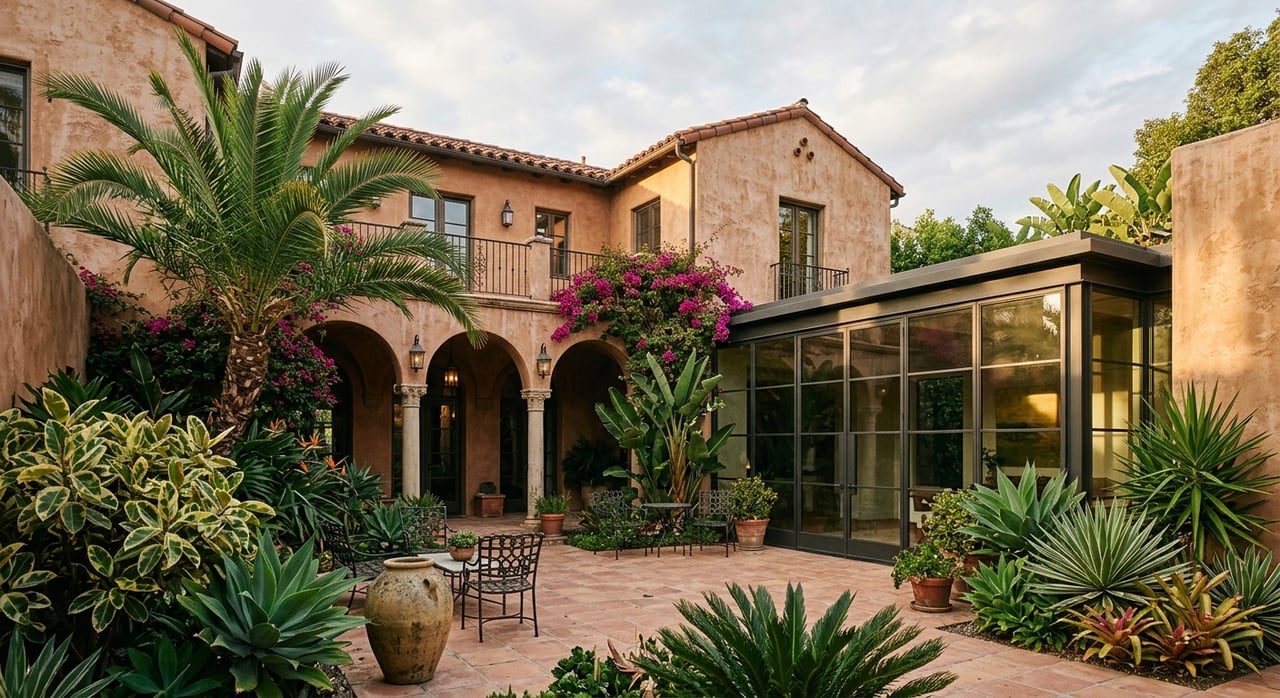
Mediterranean-inspired houses became widespread in Miami-Dade during the 1920s land boom. County architectural history describes the style through features like stucco walls, low-pitched tile roofs, arches, tile-capped parapets, articulated door surrounds, and courtyard or loggia planning that emphasizes outdoor living.
In Coconut Grove, these homes often feel more formal than vernacular cottages. You may notice stronger symmetry, more defined entertaining areas, and a clearer separation between public and private spaces.
Vizcaya offers one of the area’s best-known local references. Its main house in the Coconut Grove area is described as a Mediterranean-style building adapted to the subtropical climate, which is an important point. In the Grove, even formal architecture is still shaped by heat, light, and the need for shaded outdoor space.
Tropical modern homes
What many buyers recognize as tropical modern is closely tied to Miami modernism adapted to subtropical living. Miami-Dade’s architectural history highlights Coconut Grove modernist houses by architects including Alfred Browning Parker that use open-plan living, raised or open floors, verandas, plate glass, jalousied windows, landscaped patios, and cross-ventilation.
These homes usually feel lighter and more open than earlier styles. Flat or low-slope roofs, broad glass, deep overhangs, and strong visual connections to gardens or pools are common cues.
The best examples are not just modern in appearance. They are carefully organized around breeze, shade, and outdoor circulation, which is why many of them still feel so livable today.
How to identify a home’s style quickly
When you are scrolling listings, a few visual clues can tell you a lot. Instead of focusing only on finishes or staging, look first at the structure and how the home sits on the lot.
Look at the roof and openings
Roof shape is often one of the fastest clues.
- Gable or hip roofs with metal or shingle finishes often point toward cottage or Caribbean vernacular roots.
- Low-pitched tile roofs often suggest Mediterranean influence.
- Flat or low-slope roofs usually signal tropical modern design.
Windows and doors add another layer.
- Narrow sash windows and Bahamian shutters often align with vernacular cottages.
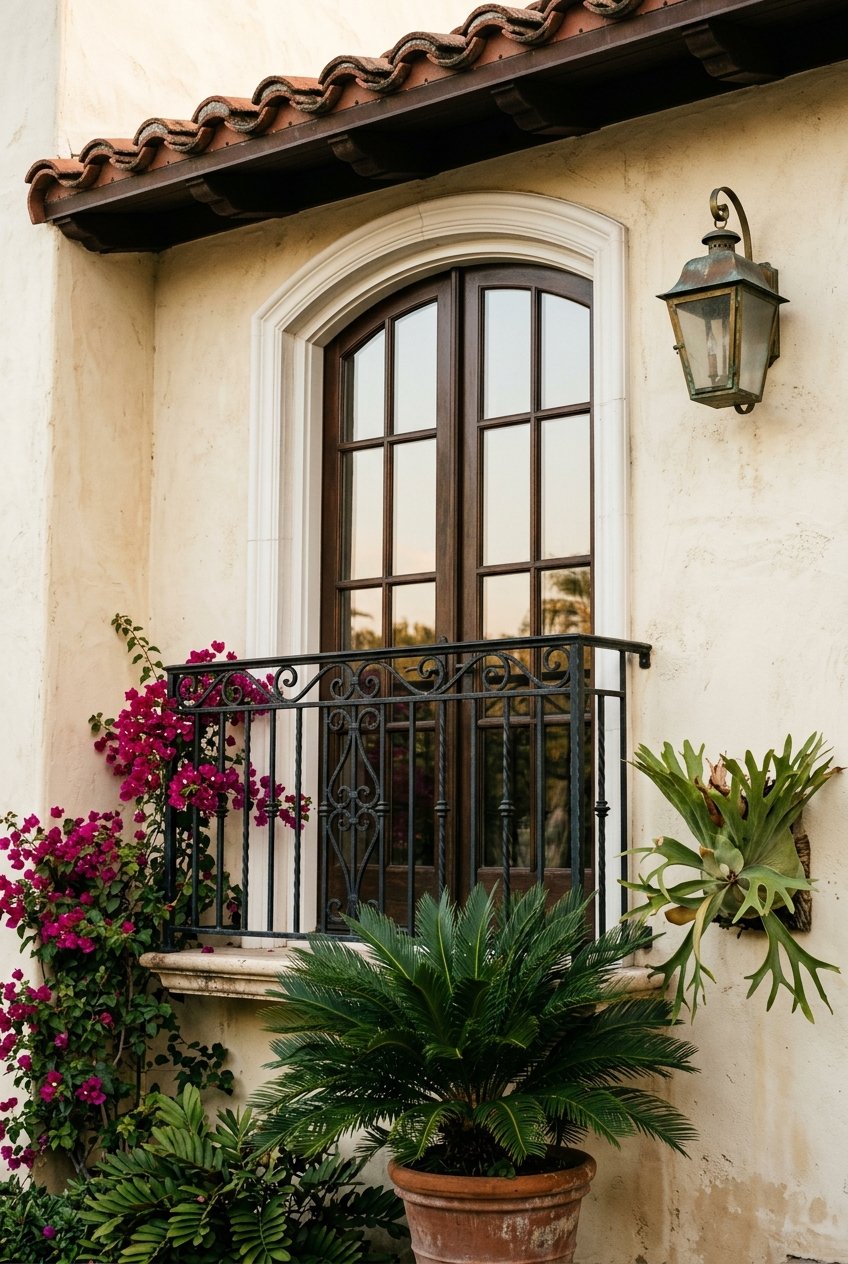
- Arches and more formal openings often point to Mediterranean-inspired homes.
- Large glass openings, jalousied windows, and broad indoor-outdoor transitions often suggest tropical modern planning.
Study the porch, loggia, or veranda
Outdoor rooms are especially revealing in Coconut Grove. A deep front porch often supports a cottage reading, while a courtyard or loggia may lean Mediterranean. Wide verandas, landscaped patios, and pool-facing living areas often fit tropical modern homes.
These are not small details. In the Grove, outdoor living spaces are central to how a house works, not just decorative extras.
Pay attention to materials
Material choices can help confirm what you are seeing.
- Board-and-batten, clapboard, and light-colored stucco often appear in Caribbean vernacular traditions.
- Coral rock or oolitic limestone may appear in older homes and can support a cottage or climate-responsive historic reading.
- Stucco with tile accents is commonly associated with Mediterranean-inspired houses.
- Glass-heavy facades with simple planes often fit tropical modern homes.
Read the lot and landscape
In Coconut Grove, the setting tells part of the architectural story. Local conservation guidance emphasizes tree canopy, open space, and unusual lot geometry, so mature landscaping and generous setbacks are more than just visual charm.
A house that seems to nestle into the lot, use shade intentionally, and open toward gardens is often expressing a distinctly Grove way of living. That relationship between home and landscape is one of the neighborhood’s strongest unifying themes across styles.
Why updates do not always change the style
One reason Coconut Grove homes can be tricky to classify is that many have been thoughtfully updated over time. A listing might mention impact-resistant windows, new roofing, or exterior improvements, but those changes do not necessarily erase the home’s architectural roots.
For example, Village West guidelines allow impact windows if they retain the traditional appearance of divided sash windows. So if you see faux mullions or Bahamian shutters paired with newer glazing, that may reflect preservation-minded updating rather than a completely reworked facade.
This distinction matters for both buyers and sellers. Buyers can better understand what is original in spirit, and sellers can present updates in a way that respects the home’s character rather than making it seem generic.
What preservation means for buyers and sellers
If a property is designated or located within a historic district or overlay, preservation rules may affect what can be changed on the exterior. Miami-Dade’s preservation program and the City of Miami’s historic preservation rules indicate that exterior alterations, demolition, and sometimes additions may require review or a certificate process.
That does not mean a historic or character home is harder to own. It means due diligence is especially important early in the process, particularly if you are planning changes or evaluating past improvements.
For sellers, this context can also shape pricing, marketing, and buyer expectations. Homes with architectural significance often benefit from more careful storytelling and preparation, because their value is tied to details that standard listing language may miss.
What style means in real buying decisions
Architectural style is not just an aesthetic label. It affects how a home lives day to day.
A Bahamian or Caribbean vernacular cottage may appeal to you if you love intimacy, porches, and a casual connection to the outdoors. A Mediterranean-inspired house may suit you if you want more formal entertaining spaces, symmetry, and classic detailing. A tropical modern home may feel right if you prefer open plans, broad glass, and a stronger visual link to garden or pool areas.
For sellers, style influences which details deserve emphasis before going to market. The right preparation can help buyers understand whether the home’s strength lies in original shutters, a loggia, a breezy veranda, mature tropical landscaping, or the spatial drama of a modern indoor-outdoor plan.
The Grove’s common thread
Although Coconut Grove homes vary widely, they share a common thread. The most compelling character homes respond to the same subtropical environment, but they do so in different ways.
Some lean into cottage simplicity and Caribbean tradition. Others express Mediterranean formality or modern openness. What ties them together is a strong relationship to shade, breeze, vegetation, and outdoor space.
That is why style in Coconut Grove is never just about the front elevation. It is about how the house sits, breathes, and belongs to its setting.
If you are considering a move in or out of Coconut Grove, it helps to work with people who understand not just price per square foot, but the architectural language behind a home’s value. For thoughtful guidance on buying or selling a distinctive property, connect with Laura Mullaney & Jane Gomez-Mena.
FAQs
What architectural styles are most common in Coconut Grove character homes?
- The main style families you will often see are Bahamian or Caribbean vernacular cottages, Mediterranean-inspired homes, and tropical modern residences.
How can you identify a Bahamian or Caribbean vernacular home in Coconut Grove?
- Look for features such as sash windows, Bahamian shutters, light-colored stucco or wood siding, board-and-batten walls, porches, and gable or hip roofs with metal or shingle finishes.
What makes a Mediterranean-inspired home in Coconut Grove different from a cottage?
- Mediterranean-inspired homes often feel more formal and symmetrical, with stucco walls, tile roofs, arches, courtyards, or loggias and a clearer separation between entertaining areas and private rooms.
What are the signs of a tropical modern home in Coconut Grove?
- Common signs include open-plan living, deep overhangs, large glass openings, flat or low-slope roofs, verandas, landscaped patios, and a strong connection to light, breeze, and garden or pool views.
Why does landscape matter when evaluating Coconut Grove architecture?
- In Coconut Grove, mature trees, open space, setbacks, and the home’s placement on the lot are part of the neighborhood’s historic character and help explain how the architecture responds to the subtropical setting.
What should buyers know about historic review for Coconut Grove homes?
- If a home is designated or located in a historic district or overlay, exterior changes, demolition, and some additions may require review, so checking designation status early is an important part of due diligence.