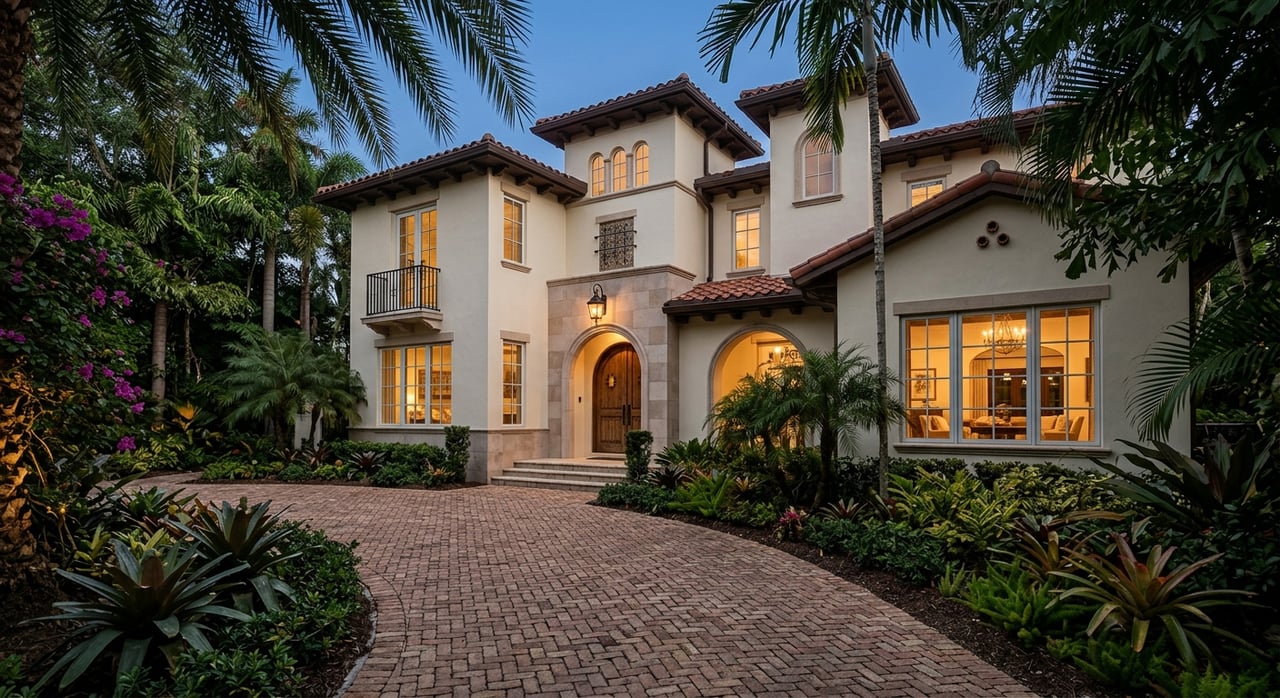
Are you buying in Coconut Grove and wondering why one address feels connected to the village while another feels shaded, tucked away, or closely tied to the bay? That is a smart question, because Coconut Grove is not one uniform neighborhood. It is a collection of distinct pockets, and understanding those differences can help you choose a home that fits your daily routine, design preferences, and long-term goals. Let’s dive in.
Why micro-neighborhoods matter in Coconut Grove
The City of Miami describes Coconut Grove as a place made up of several distinct, unofficial neighborhoods. The city’s neighborhood conservation framework is designed to preserve the Grove’s landscaped residential character, tree canopy, green space, bay views, public open space, commercial services, and historic structures.
For you as a buyer, that means small location shifts can change the feel of everyday life. One block may place you close to dining and trolley stops, while another may feel quieter, more residential, and more rooted in shade and open space.
The best way to compare Coconut Grove areas
When you compare Coconut Grove micro-neighborhoods, the most useful lens is not labels alone. It is how each area functions day to day.
A practical comparison usually comes down to four questions:
- How close do you want to be to the village core?
- Do you want a bay-oriented or park-oriented setting?
- How important are tree canopy and open space?
- Do you prefer lively mixed-use streets or quieter residential blocks?
That framework follows the city’s own preservation language and the way the commercial core is organized.
Village Center offers the shortest walk
The Village Center is the compact core around Oak Street and Tigertail Avenue, SW 27th Avenue, and the Main Highway and Barnacle side of the Grove. In practical terms, this is the most village-like part of Coconut Grove.
If you want the easiest walk to dining, shopping, and active street life, this is usually the strongest fit. CocoWalk is described as the center of Coconut Grove, and nearby access points cluster around Main Highway, Grand Avenue, Commodore Plaza, McFarlane Road, and trolley stops.
This area also puts you close to some of the Grove’s best-known public open spaces. Peacock Park offers waterfront park space, picnic tables, a playground, a recreation center, and bike racks, while David T. Kennedy Park adds bike paths, a dog park, volleyball, outdoor gym equipment, and waterfront access.
Who Village Center suits best
Village Center often appeals to buyers who want a more active daily rhythm. If you picture walking out for coffee, dinner, or an evening stroll near the village core, this part of the Grove deserves a close look.
It can also be a strong match if you want nearby parks without giving up easy access to the commercial center. For buyers who value convenience and energy, it often rises to the top of the list.
North Grove feels closest to the bay edge
North Grove sits north of Biscayne Bay, east of SW 27th Avenue, and near the Rickenbacker Causeway side of the Grove on the city’s map. Vizcaya identifies itself as being in north Coconut Grove, overlooking Biscayne Bay, and within walking distance of the Vizcaya Metrorail Station.
For many buyers, North Grove reads as the most edge-of-the-city part of Coconut Grove. It feels closely tied to bay-facing landmarks and northbound connections, which can matter if you want a location that feels both Grove-rooted and well positioned near Miami’s urban core.
What stands out in North Grove
This area is often the conversation starter for buyers drawn to a bay-adjacent setting. It tends to stand apart from the more inland residential pockets because of its relationship to Biscayne Bay and nearby landmark spaces.
If your ideal home search includes architecture, setting, and a sense of arrival near the water, North Grove may feel especially compelling. It is less about the village bustle and more about that bay-edge orientation.
Center Grove gives you a middle ground
Center Grove occupies the middle subdistrict, bounded by U.S. 1, SW 27th Avenue, Oak Street, and SW 32nd Avenue. Because of that position, it often works well for buyers who want Coconut Grove character without being in the most active village blocks.
Think of Center Grove as the in-between option. It is less commercial than Village Center, but it is not as tucked away as some of the quieter canopy-heavy areas farther south or west.
Why buyers often like Center Grove
If you want balance, Center Grove is worth serious attention. You may find that it offers easier access to both the village core and more residential streets, which can create a nice blend of convenience and calm.
For design-minded buyers, that middle-ground feel can be especially appealing. It allows you to focus on the home itself, the lot, and the block, while still keeping the wider Grove accessible.
South Grove leans lush and tucked away
South Grove extends below the Oak and Tigertail line and reaches toward Biscayne Bay, Prospect Drive, Battersea Road, and Le Jeune Road. This is where Coconut Grove’s landscape-first identity comes through most clearly.
The city emphasizes naturally occurring trees, bay views, public open space, and unique lot sizes and shapes as part of the district’s character. The Barnacle Historic State Park reinforces that atmosphere with its shorefront setting, tropical hardwood hammock, and many large, old trees.
Why South Grove feels different
For many buyers, South Grove is the strongest candidate if you want a canopy-oriented, tucked-away atmosphere. The preserved landscape character is a major part of what gives this area its appeal.
If you are drawn to historic or architecturally distinctive homes, this setting can be especially meaningful. The surrounding greenery, mature trees, and quieter texture often become part of the home’s experience, not just the backdrop.
West Grove feels local and corridor-oriented
West Grove, including Village West and the Charles Avenue area, has a different feel from the bayfront and village-core sections. This is where Coconut Grove reads most clearly as a local main-street neighborhood.
City planning materials connect this area to the Grand Avenue corridor and the legacy of early Black Bahamian settlers. The city also identifies ongoing and planned public works in the area, including West Grove roadway improvements in design and Charles Avenue roadway improvements, with traffic calming completed and roadway construction planned from April 2027 to April 2028.
How to think about West Grove
West Grove is best understood as more street-oriented and neighborhood-first. If you prefer a locally scaled corridor feel over a waterfront or tourism-centered atmosphere, this area may be the right one to study more closely.
It also rewards buyers who pay attention to block-by-block change. In a place with active public realm planning, location details matter.
Comparing the Grove by lifestyle
The easiest way to narrow your search is to match each micro-area to the experience you want most.
| What matters most to you | Micro-area to explore first | Why |
|---|---|---|
| Walkability to shops and dining | Village Center | Closest to CocoWalk, the commercial core, parking, and trolley access |
| Bay-oriented setting | North Grove or Dinner Key/South Bayshore edge | Strongest connection to bay-facing landmarks, parks, and marina areas |
| Quiet canopy and open space | South Grove | Strong landscape identity, mature trees, and proximity to The Barnacle |
| Balanced access and residential feel | Center Grove | Middle-ground location between the core and quieter sections |
| Local corridor character | West Grove | Main-street feel shaped by Grand Avenue and Charles Avenue |
Don’t treat boundaries as interchangeable
In Coconut Grove, boundaries matter more than many buyers expect. The city explicitly notes that the Grove includes several distinct, unofficial neighborhoods, and that helps explain why one block can feel meaningfully different from the next.
That is especially important if you are buying an older or architecturally distinctive home. Setting, street character, tree canopy, and access patterns can influence not just your lifestyle, but also how a property feels when you arrive and how it may be perceived over time.
A smart buying strategy for Coconut Grove
Before you focus only on bedrooms, square footage, or finishes, spend time defining the setting you want. In Coconut Grove, your daily experience may be shaped just as much by the surrounding micro-neighborhood as by the house itself.
A thoughtful search often starts with questions like these:
- Do you want to walk to the village core often?
- Would you rather be closer to bayfront activity or shaded residential streets?
- Is park access a priority?
- Do you prefer lively surroundings or a more tucked-away feel?
- How important is historic or architectural context to your search?
For buyers considering vintage, historic, or architecturally distinctive homes, those questions become even more important. The right fit is not just about finding a beautiful property. It is about finding the right setting for that property and for the way you want to live in Coconut Grove.
If you are weighing Coconut Grove block by block, a nuanced local perspective can make the process much clearer. Laura Mullaney & Jane Gomez-Mena help buyers understand how architecture, setting, and neighborhood character come together so you can search with more confidence.
FAQs
Which Coconut Grove micro-area is most walkable for homebuyers?
- Village Center is generally the most walkable option because it is closest to CocoWalk, the commercial core, parking areas, and the trolley network.
Which Coconut Grove area feels most connected to Biscayne Bay?
- North Grove and the Dinner Key or South Bayshore waterfront edge are the most bay-oriented parts of the comparison, based on their proximity to Biscayne Bay, marina access, and bay-facing landmarks.
Which Coconut Grove micro-neighborhood feels most lush and secluded?
- South Grove is the strongest choice if you want a more canopy-oriented and tucked-away setting, supported by the city’s preservation focus and the landscape character around The Barnacle.
Which Coconut Grove area has the strongest local main-street feel?
- West Grove is typically the most corridor-oriented and neighborhood-first area, especially around Grand Avenue and Charles Avenue.
How precise should you be when comparing Coconut Grove blocks?
- Very precise, because the city recognizes Coconut Grove as a collection of distinct unofficial neighborhoods, and even nearby blocks can feel meaningfully different in character and daily experience.